



A Sea-Doo executive who has been instrumental in the company’s increasing sales domination of the Jet Ski market globally insists the brand wants rivals to survive – to maintain healthy competition and drive innovation.
Sea-Doo now represents 70 per cent – or seven out of every 10 – Jet Skis sold globally, as the marketshare of Yamaha WaveRunner and Kawasaki Jet has waned in recent years.

Although the numbers vary from country to country, in broad terms Sea-Doo now has a 70 per cent share of the personal watercraft market, while Kawasaki Jet Ski has between 3 and 4 per cent, with Yamaha WaveRunner accounting for the remaining 25 to 26 per cent.
This level of dominance is the envy of Sea-Doo’s rivals – and other industries – and comes as Sea-Doo recently reset its own benchmark for the most powerful Jet Ski on sale today.
Plus the company launched a new hull and a larger, more powerful engine on its cheapest model, the Sea-Doo Spark (pictured above and below).

Conversely, Yamaha WaveRunner and Kawasaki Jet Ski appear to have not had the sales boost they were hoping for with their recent model introductions.
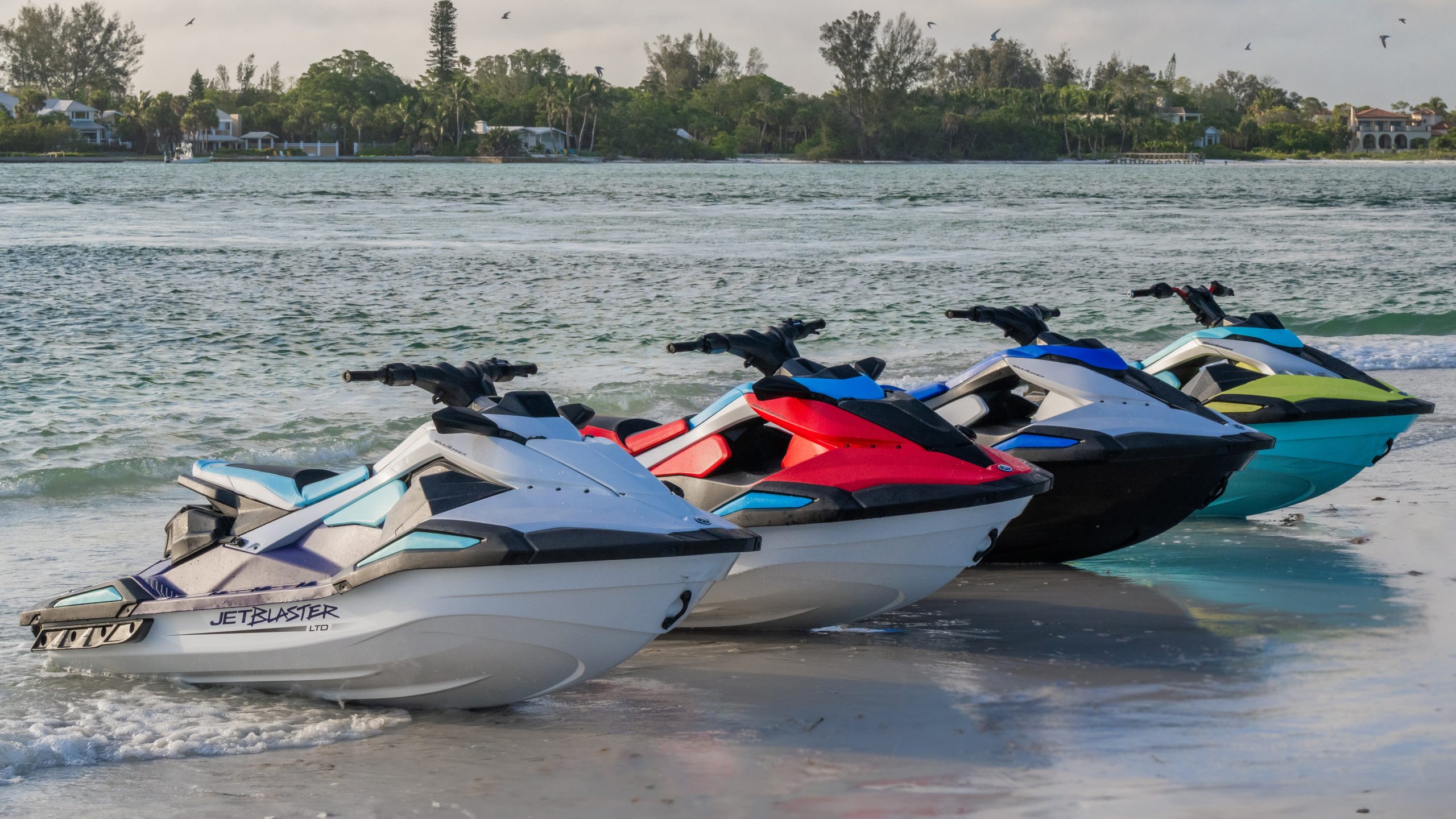
Yamaha unveiled the CrossWave four-seat fishing model last year, and a new JetBlaster range (pictured below) two years ago to challenge the Sea-Doo Spark.
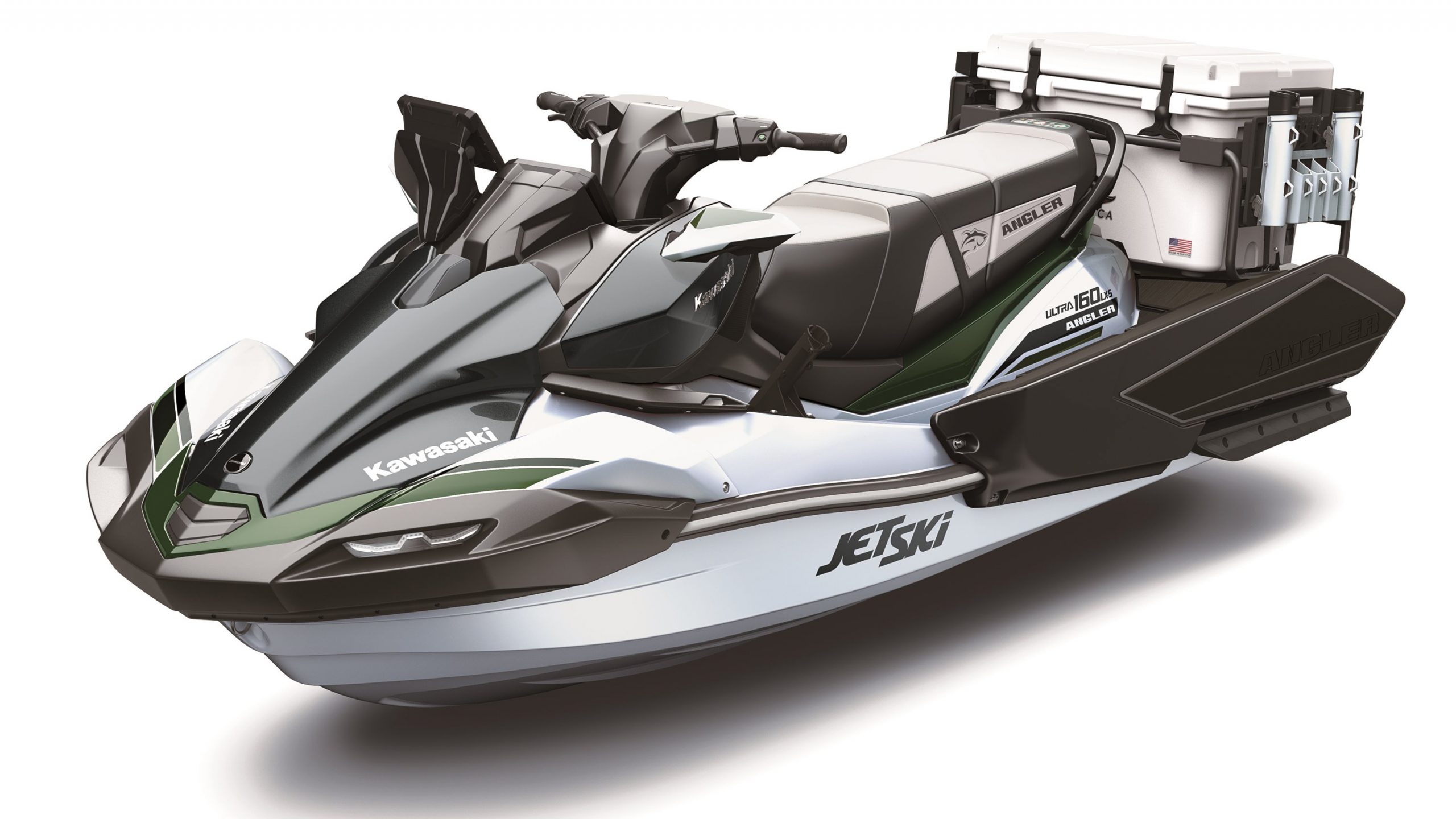
Kawasaki unveiled the Angler fishing model two years ago (pictured below), and last year rolled out a redesign of its cheapest sit-down model, the Kawasaki STX 160.
Despite Yamaha and Kawasaki introducing new or updated models, Sea-Doo’s marketshare has climbed as it has introduced more widespread changes and more technical upgrades than its rivals.
When asked if Sea-Doo was concerned its dominance could push Yamaha WaveRunner and Kawasaki Jet Ski out of the market altogether, Sea-Doo’s Director of Product Strategy, James Heinz, told Watercraft Zone at the recent 2027 Sea-Doo model unveilings in Orlando, Florida:
“I certainly hope not. Our goal right now is to have the healthiest industry possible.
“We’ve seen what can happen when the personal watercraft industry can hit a downturn.
“We saw it in the 1990s and how bad it can get if we don’t take care of the health of our industry.

“Thank goodness we launched the (budget-priced) Sea-Doo Spark in 2014, which helped reinvigorate us and the industry.
“We absolutely need a healthy industry, and that’s going to take more than one OEM (manufacturer) for it to prosper.
“(Sea-Doo’s parent company) BRP also has a lot of experience in the snowmobile industry. And we just saw a major player pull out of the snowmobile industry. Yamaha is now gone from that segment.
“So it is essential that we work together for the health of our industry.

“We love being number one. We will continue to push to be number one. And we will continue to innovate and to keep upgrading, and make sure that all of our customers across the spectrum of needs are happy.
“However, right now, as the main marketshare holder in the industry, our other mission is to expand the market.
“That’s why you’re seeing us putting a lot of effort into models like the Fish Pro, Explorer Pro, the performance line-up, and the new engine and hull for the Spark.

“In the fishing segment, upwards of 75 per cent of customers that are buying our Fish Pro units are new to the marine market entirely.
“So we’re getting new people in, and we’re expanding the capability of personal watercraft and our industry, so that we can create a bigger market and create more choice for more customers.”
MORE: All our Sea-Doo coverage in one click
MORE: All our Yamaha WaveRunner coverage in one click
MORE: All our Kawasaki Jet Ski coverage in one click
MORE: All our news coverage in one click
MORE: Follow us on Facebook
MORE: Follow us on YouTube